
Featured Industrial Genset kVA Solutions (01–08)
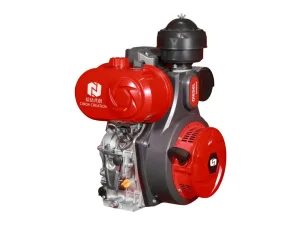
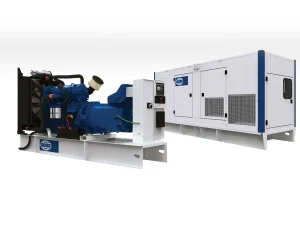
Verified factory-calibrated prime and standby generator systems ranging from versatile high-capacity units to silent, urban-compliant configurations.
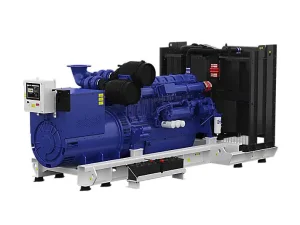
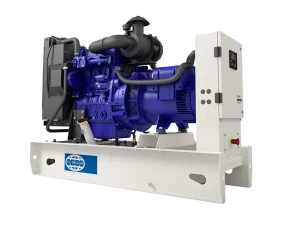
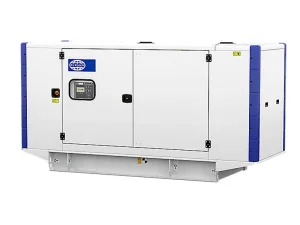
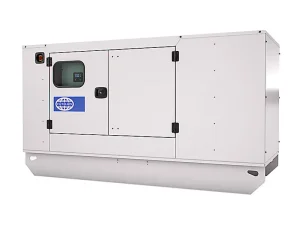
Global Macro Shift: Energy Resilience & Industrial Genset kVA Demand
The global operational paradigm for power security has fundamentally decoupled from localized grid stability. Unprecedented climatic fluctuations, extreme weather events, load shedding in fast-developing manufacturing corridors, and the surging baseload appetites of hyperscale data centers have elevated diesel generator sets (gensets) from secondary emergency equipment into non-negotiable strategic capital infrastructure. As enterprises transition toward integrated hybrid architectures, understanding genset capacity metrics—specifically apparent power (kVA) vs. real power (kW)—remains central to electrical engineering designs and life-cycle risk mitigation.
Apparent power, denoted in kilovolt-amperes (kVA), governs the total current a generator set's alternator can safely carry without thermal breakdown. Calculating the correct kVA size accounts not only for baseline operational wattage (kW) but directly addresses power factor (typically 0.8 lagging for industrial inductive loads) and the instantaneous inrush currents generated by multi-stage motor starting, chiller compressors, and uninterruptible power supply (UPS) rectifiers. International engineering best practice dictates strict adherence to standard ISO 8528-1:2018 classifications, categorizing duties into Emergency Standby Power (ESP), Prime-Rated Power (PRP), and Continuous Operating Power (COP).
Data Infrastructure & AI Clusters
Hyperscale facilities require Tier III and Tier IV redundancy. Our large-range sets (>800 kVA to 2500 kVA) incorporate fast-starting brushless alternators, digital AVR excitation, and transient response systems capable of absorbing 100% single-step block loads within strict voltage drop constraints (<15%).
Mining, Oil & Gas Pipelines
Operating in isolated frontiers, such as the 2,400-km China–Myanmar crude oil pipeline where 17 gas units and 5 Wilson diesel generators provide continuous Prime/COP operation, these sets feature heavy-duty sand-filtration, oversized heat exchangers, and continuous lubrication delivery.
Healthcare & Emergency Systems
Surgical theaters and ICU intensive care units tolerate zero power disruption. Silent canopy enclosures engineered for acoustic dampening (down to 68 dBA at 7 meters) maintain continuous power through ultra-reliable Automatic Transfer Switch (ATS) loops synchronized with utility feeds.
The Precision Factory Advantage: Engineered In Beijing, Deployed Globally
Combining global engineering licenses from FG Wilson and Weichai with vertically integrated manufacturing, digitalized factory testing, and rigorous ISO-certified production governance.
Beijing Xinda Creation Machinery Equipment Co., Ltd. (Cinda Creation) exemplifies the high-efficiency synthesis of world-class core powertrains and scalable precision packaging. Operating with ISO 9001 (Quality Management System), ISO 14001 (Environmental Management System), and ISO 45001 (Occupational Health and Safety) certified facilities, Cinda Creation eliminates the classic friction points encountered by international purchasers: exorbitant Western OEM markups, extended delivery backlogs exceeding 40 weeks, and inadequate component-level customizability.
Every unit assembled or configured in our production matrix undergoes comprehensive factory witness testing (FAT) on computer-controlled resistive-reactive load banks. Our test protocols validate engine heat-run metrics, turbocharger boost dynamics, alternator winding insulation resistance (Megger testing), phase balancing under 100% unbalanced load conditions, and sound-attenuation canopy boundary parameters.
Engine Architecture
Direct strategic partnerships with Perkins and Weichai provide access to the latest heavy-duty electronic and mechanical fuel-injected engines, ensuring optimum brake mean effective pressure (BMEP) and low fuel consumption (g/kWh).
Alternator Optimization
Coupled with world-leading brushless Leroy-Somer or Stamford alternators featuring 2/3 pitch designs to suppress harmful 3rd harmonic currents, auxiliary PMG excitation, and Class H temperature-rise insulation.
Precision Fabrication
Canopy sheet metals are cut using ultra-high-precision 20kW fiber lasers, welded through automated robotic fixtures, and coated with 9-stage phosphate powder immersion for 1,000-hour salt spray corrosion resistance.
Turnkey Lead Times
Our agile inventory pipeline maintains over 600 SKUs, ensuring that small (<220 kVA), medium (225–938 kVA), and large (>800 kVA) sets can be configured, tested, and crated for ocean export within an industry-beating 15 to 30 days.
Genset kVA Dimensioning: Technical Comparison Matrix
Understanding the mechanical, electrical, and thermal behavior across standard FG Wilson and industrial diesel ratings.
| Class Range | Typical kVA Range | Engine Platform | Cooling / Ventilation | Recommended Applications | Control & Synchronizing |
|---|---|---|---|---|---|
| Small Range | 11 kVA – 220 kVA | Perkins 403 / 1103 / 1104 / 1106 Series | Mechanical Radiator (50°C Ambient) | Telecom BTS towers, clinics, branch banks, retail complexes, remote construction skids. | Deep Sea / FG Wilson PowerWizard 1.1+, manual or auto-start ATS integration. |
| Medium Range | 225 kVA – 938 kVA | Perkins 1206 / 1506 / 2206 / 2506 Series | Heavy-Duty Belt/Gear Driven Cooling Airflow | Commercial hospitals, high-rise buildings, municipal wastewater facilities, cold storage warehouses. | PowerWizard 2.1, ComAp InteliGen, load sharing, remote SCADA telemetry via Modbus/SNMP. |
| Large Range | 1000 kVA – 2500+ kVA | Perkins 4012 / 4016 / Weichai Baudouin Platforms | Remote Horizontal/Vertical Radiators & Plate Heat Exchangers | Data centers, mining concentrators, large industrial manufacturing plants, marine utility auxiliary. | Digital parallels, multi-megawatt bus synchronizing, Woodward/Deif co-generation controllers. |
| Extreme Duty | Custom kVA Packages | Multi-Engine Redundant Configurations | Anti-Freeze Circulating Heaters, High-Dust Pre-Cleaners | Desert pipelines (+55°C), Arctic installations (-40°C), offshore platform auxiliary power. | Redundant dual-redundant PLC automation, automatic fire-suppression interlocks. |
Engineering Note: Real Power Factor Calculation
When converting project equipment requirements: kW = kVA × 0.8 (Power Factor). Always incorporate motor starting code letters (NEMA code) to ensure locked-rotor kVA (LRkVA) does not exceed instantaneous alternator transient reactance (X"d) thermal tolerance, which causes undervoltage tripping across sensitive electronic control systems.
Engineering For Extreme Operating Parameters
From Arctic permafrost below -40°C to equatorial deserts exceeding +50°C, generator sets supplied by Cinda Creation are field-hardened for demanding global operating conditions.
High-Altitude Derating Controls
Standard atmospheric pressure decreases at elevations exceeding 1,000 meters above sea level, causing thinner combustion air, higher cylinder exhaust temperatures, and reduced alternator cooling capacity. Our engineering team installs high-pressure wastegated turbochargers and recalculates engine-alternator derating curves (ISO 3046 / ISO 8528) to guarantee rated kVA output under thin atmospheric conditions.
Tropical & High-Ambient Canopies
Standard generators risk thermal overheating in Middle Eastern and sub-Saharan summer climates. We engineer purpose-built tropical radiators with 55°C core clearance, anti-clog wide fin pitch, auxiliary electric scavenging fans, and dual-layer thermal barrier coatings on exhaust manifolds to prevent mechanical shutdowns.
Sub-Zero Arctic Cold Start Packages
For projects operating in high-latitude zones where equipment has been proven over 20+ years of continuous field service, gensets feature thermostatically controlled engine coolant jacket heaters, silicone oil pan heating blankets, fuel-water separators with electric pre-heaters, heavy-duty AGM batteries, and automatic motorized intake/exhaust louver louvers.
Future Trends: Hybrid Genset kVA & Decarbonization
The diesel generation industry is undergoing transformation, moving from isolated internal combustion units toward integrated low-emission, hybrid-ready distributed power assets.
PV-BESS-Genset Microgrid Architecture
Commercial users are coupling diesel gensets with Solar PV arrays and Battery Energy Storage Systems (BESS). Intelligent microgrid master controllers treat the generator as an automated reserve asset, dispatching it only when battery state-of-charge (SoC) drops below calibrated thresholds, reducing fuel consumption by 40% to 65%.
HVO & Synthetic Biofuel Compatibility
To satisfy Scope 1 corporate carbon reduction targets, our entire catalog of Perkins and Weichai engine-driven units is verified for 100% Hydrotreated Vegetable Oil (HVO, EN 15940) without degrading rated kVA output or requiring engine modification, slashing net life-cycle greenhouse gas emissions by up to 90%.
Cloud-Based Telemetry & Edge Analytics
Standardization of 4G/IoT gateway modules enables real-time transmission of fuel levels, oil viscosity pressure, coolant temperatures, vibration harmonics, and battery impedance directly to fleet maintenance teams via encrypted web portals, enabling predictive fault intervention before uncontained outages occur.
Global Procurement Checklist: Key Genset Sizing Criteria
Ensure flawless engineering coordination by confirming these essential electrical and mechanical parameters before issuing an international purchase order.
Load Profiles & Transients
Tabulate steady-state running kW alongside maximum instantaneous kVA demand caused by motor inrush, VFD non-linear harmonics, and medical imaging step-loads.
Electrical Characteristics
Specify operating line-to-line and line-to-neutral voltages (e.g., 400V/230V, 380V/220V, 480V/277V), system frequency (50Hz vs 60Hz), and neutral grounding configuration.
Site Environmental Data
Provide true installation altitude (meters above sea level), maximum dry-bulb ambient temperature, relative humidity, and seismic risk zoning certifications.
Autonomy & Controls
Designate required continuous running fuel tank capacity (8-hour base tank vs. external day-tank systems), ATS bypass contactors, and remote SCADA monitoring links.
Featured Industrial Genset kVA Solutions (09–16)
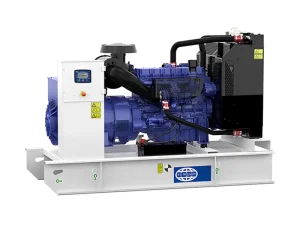
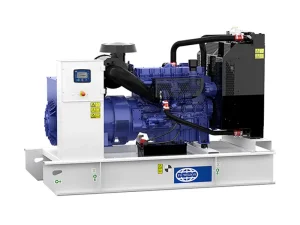
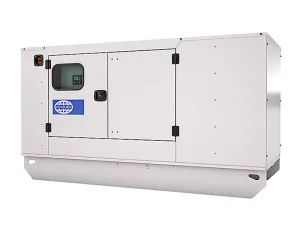
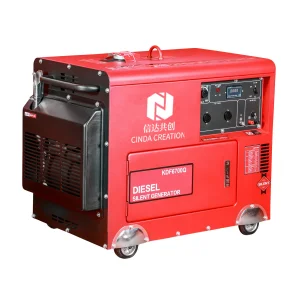
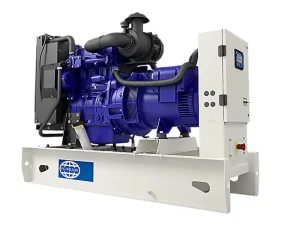
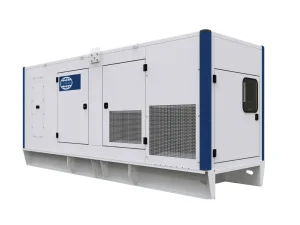
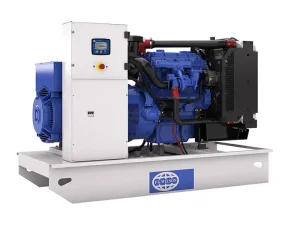
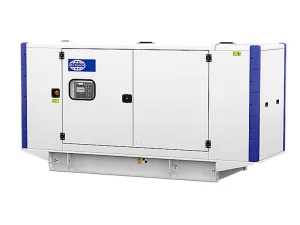
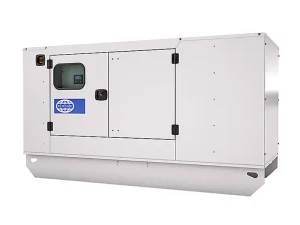
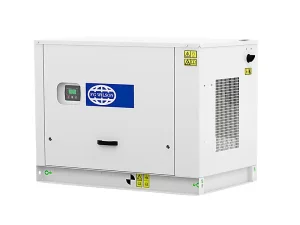
Compact, ultra-quiet, open-frame, and low-noise commercial generator units calibrated for dependable municipal, residential, and facility duty.
Frequently Asked Technical & Procurement Questions
Clear, mathematically verified answers from our Senior Application Engineers regarding genset kVA sizing, installation requirements, and export logistics.
What is the definitive mathematical relationship between kVA and kW in three-phase power sizing?
What is the difference between Standby (ESP), Prime (PRP), and Continuous (COP) ratings?
• Emergency Standby Power (ESP): Maximum power available under a variable electrical load during a utility power outage. No overload capability is permitted. Maximum 200 hours of operation per year with an average load factor not exceeding 70% over 24 operating hours.
• Prime-Rated Power (PRP): Unlimited annual running hours under variable electrical loads. An overload of 10% is permissible for 1 hour every 12 operating hours. The 24-hour average load factor should not exceed 70% of the prime rating.
• Continuous Operating Power (COP): Continuous baseline supply to a constant 100% electrical load for unmetered hours annually, typical for base-load utilities and remote mining sites without grid access.
How do you prevent "wet stacking" in oversized diesel generator sets?
Should our facility procure an open-frame or sound-attenuated silent canopy generator?
Silent Canopy: Mandatory for outdoor installations, municipal locations, commercial hospitals, urban compounds, and construction zones subject to strict local noise ordinances. Cinda Creation's silent enclosures feature galvanized steel panels, non-hygroscopic acoustic rock wool baffling, internal residential-grade silencers, and weatherproof gaskets, attenuating sound to 68–75 dBA at 7 meters.
What quality verification documentation accompanies each export delivery?
1. Official ISO 9001 / ISO 14001 factory conformity certificates.
2. Complete factory load test record (0%, 25%, 50%, 75%, 100%, and 110% step-load readings, fuel consumption telemetry, vibration logging).
3. Engine & alternator serial-verified OEM warranty passports (12 months from commercial startup or 1,000 running hours).
4. High-resolution schematic wiring diagrams, terminal wiring schedules, and operation & maintenance (O&M) manuals in English.