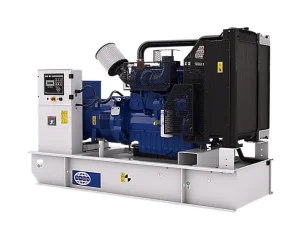
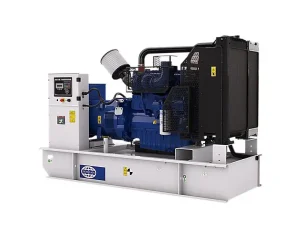
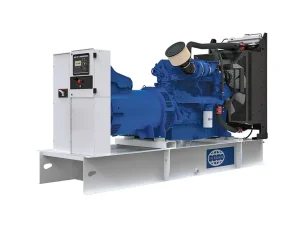
P250-5 Series
225-838 kVA
Korea Industrial
Pre-configured for 380V/220V 60Hz 3-phase synchronization, dual-frequency operation, low harmonic distortion (THD < 3%), and ISO 8528 G3 load-step responsiveness.
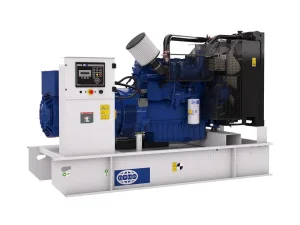
From the mega-semiconductor clusters of Pyeongtaek and Yongin to the high-demand petrochemical and naval engineering corridors of Ulsan and Geoje, continuous operational continuity hinges on robust medium-range on-site generation.
The Republic of Korea stands as one of the world's most concentrated industrial powerhouses. The nation's high-tech manufacturing spine—anchored by memory chip foundries, automotive automation facilities, secondary battery gigafactories, and bio-pharmaceutical cleanrooms—demands electric power with near-zero tolerance for harmonic distortion, frequency sag, or momentary interruptions.
While the national utility, Korea Electric Power Corporation (KEPCO), maintains an impressive baseline grid reliability, the concentration of massive electrical loads across Gyeonggi Province has introduced localized transmission bottlenecks. Substation capacity constraints, rapid seasonal peak load surges (summer cooling and harsh winter heating), and the increasing integration of intermittent offshore wind and solar have amplified power quality risks. For an advanced wafer fabrication line or automated surface-mount assembly line, a voltage deviation lasting merely milliseconds translates into millions of dollars in scrapped silicon wafers and recalibration downtime.
How international engineering procurement teams achieve 30% to 42% CapEx optimization while maintaining zero compromises on Perkins / FG Wilson quality standards.
Domestic Korean heavy-equipment suppliers often package medium-range diesel generators with exorbitant chaebol brand premiums and rigid proprietary maintenance contracts. By procuring authentic FG Wilson powered by genuine UK/US-engineered Perkins powerhouses directly through high-capacity certified export hubs, EPC contractors eliminate multiple layers of regional distributor markups.
Critical medium-range infrastructure cannot rely on obscure or localized proprietary engine management. Every 225-938 kVA set provided features genuine Perkins industrial diesel blocks, Leroy-Somer or Stamford brushless alternators, and Deep Sea Electronics (DSE) controllers. This open global ecosystem ensures that replacement filters, injectors, and control logic boards can be sourced effortlessly in South Korea within 24 hours.
Supply chain velocity is paramount in fast-track construction projects across Korean free economic zones (FEZ). While local backlogs often stretch lead times to 28-36 weeks, our direct export pipeline from Beijing maintains pre-configured 225-938 kVA skid units with factory load-bank testing certificates ready for sea freight delivery directly into Incheon or Busan Port in under 15 days.
| Evaluation Parameter | Standard Domestic Korean Source | Our Medium Range (225-938 kVA) Solution | Strategic Advantage for Korean Operators |
|---|---|---|---|
| Initial Capital Cost (CapEx) | Baseline 100% (High Chaebol Premium) | 60% – 68% of Domestic Benchmark | Substantial savings reinvested into N+1 redundancy or soundproofing. |
| Engine Architecture | Proprietary Korean / Japanese License | Genuine Perkins Heavy-Duty UK/Global Series | Proven global MTBF exceeding 30,000 operational hours before major overhaul. |
| Alternator Specification | Standard Class H, generic winding pitch | Leroy-Somer / Stamford 2/3 pitch winding | Eliminates 3rd harmonic currents; safe for sensitive electronic SMPS loads. |
| Controller Ecosystem | Locked proprietary OEM control boards | Deep Sea Electronics (DSE8610 / DSE7320) | Universal Modbus/SNMP interface into Korean Building Automation Systems (BMS). |
| Spare Parts Availability | Restricted to dealer-exclusive channels | Open Global Industrial Supply Network | Consumables (oil, fuel, air filters) interchangeable across international distributors. |
Engineered to satisfy stringent South Korean industrial environments, seismic guidelines, and extreme ambient temperature swings (-20°C in winter to +38°C in monsoon summers).
Automated semiconductor fabrication facilities suffer catastrophic losses during micro-interruptions. Our 225-938 kVA configurations are engineered with high-inertia permanent magnet generator (PMG) excitation systems, delivering up to 300% short-circuit current capability for 10 seconds. This prevents downstream fault trips and accommodates large inductive motor-inrush loads without collapsing alternator voltage.
Korea's stringent Noise and Vibration Control Act (소음·진동관리법) mandates rigorous acoustic limits, particularly near residential boundary zones in Seoul, Bundang, and Songdo. Our sound-attenuated acoustic canopies feature dual-stage residential reactive/absorptive silencers, internally insulated 50mm acoustic rockwool baffles, and aerodynamic louver geometry that limits ambient sound to ≤65-68 dBA at 7 meters under 100% prime load.
For coastal installations such as Busan New Port, Geoje Shipbuilding Complex, and Gwangyang Steel Works, corrosion from salt spray and humidity degrades standard machinery. Our medium-range generators receive multi-stage zinc-phosphate immersion pre-treatment followed by marine-grade electrostatic polyester powder coating (C5-M specification), stainless steel 316 door hinges, and anti-condensation alternator heaters.
How the 225-938 kVA generator portfolio bridges the transition toward South Korea's 2050 Carbon Neutrality goals and decentralized smart grid networks.
As Korean conglomerates pledge allegiance to the K-RE100 initiative (100% Renewable Electricity), the operational role of medium-range generators has transformed. Rather than serving purely as emergency backstops, modern 225-938 kVA sets act as dynamic grid-stabilizing assets.
Working in concert with Battery Energy Storage Systems (BESS) and commercial rooftop solar installations, our generators utilize advanced digital paralleling controllers (such as Deep Sea DSE8610 MKII or ComAp InteliGen). The genset operates only when batteries breach critical discharge limits during prolonged grid outages or unpredicted solar cloud-shading events, slashing overall fuel consumption and localized emissions while assuring absolute baseload continuity.
Perkins engines deployed across our 225-938 kVA lineup are fully certified to run on 100% Hydrotreated Vegetable Oil (HVO/EN 15940) synthetic fuel without requiring fuel system modifications or derating power output.
For ESG-audited multinational corporations operating in South Korea, fueling with HVO eliminates up to 90% of net greenhouse gas emissions, cuts particulate matter by 30%, and significantly reduces NOx emissions—facilitating rapid environmental approvals under the Clean Air Conservation Act.
A rigorous, step-by-step engineering verification framework to ensure frictionless site inspections, fire marshal sign-offs, and environmental permits.
Under the Electric Utility Act of South Korea, all self-generation equipment above 75 kW must undergo rigorous pre-use inspection by the Korea Electrical Safety Corporation (KESCO). We supply exhaustive pre-shipment documentation packages including electrical schematics, dielectric insulation test logs, alternator short-circuit calculation sheets, and circuit breaker coordination curves compliant with Korean standards.
Korean fire codes require commercial backup power generators to initiate within 10 seconds of utility loss to power emergency sprinkler pumps, smoke extraction fans, and emergency egress lighting. Our generator control suites incorporate fail-safe dual electric starting motors, redundant nickel-cadmium battery banks, and certified automatic transfer switch (ATS) interface logic.
Emergency generators operating in South Korea must conform to regional NOx and particulate emission guidelines depending on their annual operating thresholds. Our engineering team assists facility managers in sizing appropriate selective catalytic reduction (SCR) packages or diesel particulate filters (DPF) where emergency sets cross regulatory thresholds in high-density metropolitan zones.
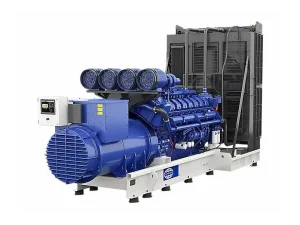
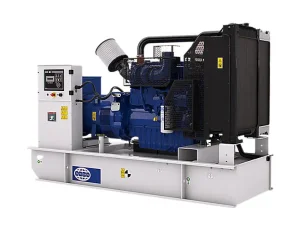
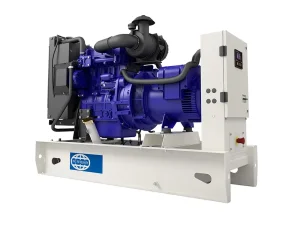
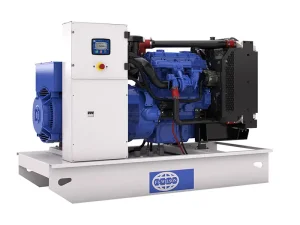
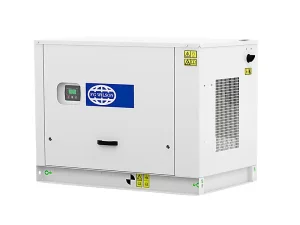
Direct supply line covering small utility units up to heavy megawatt-class sets. Retaining genuine Perkins, FG Wilson, and Weichai performance platforms.
Direct, unvarnished engineering clarity on voltage configuration, fuel efficiency, warranty validation, and delivery logistics for Korean engineering teams.
Yes. While international default production is frequently 400V/230V at 50Hz (1500 RPM), all generator units bound for South Korea are specifically factory-wound and calibrated for 380V/220V 3-phase, 4-wire configurations operating at 1800 RPM (60Hz). Engine governor software and turbocharger wastegate configurations are synchronized to maintain optimized brake-specific fuel consumption (BSFC) and full ISO 8528 Class G3 transient load acceptance at 1800 RPM.
All FG Wilson and Perkins generator sets provided by Cinda Creation carry an ironclad 12-month warranty counted from the official on-site start-up date (or up to 1,000 running hours, whichever comes first). Warranty claims are serviced via our dedicated 24-hour engineering response center. In the rare event of a component failure, diagnostic logs from Deep Sea controllers are reviewed remotely, and genuine OEM replacement components are air-freighted via DHL express to Korean sites within 48 to 72 hours.
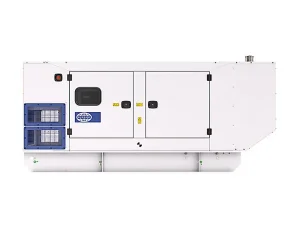
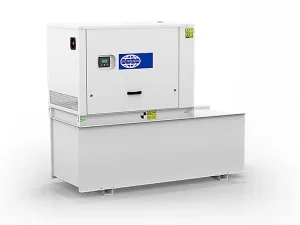
Our soundproofed canopied units (such as the P450-3-SA) utilize computer-modeled acoustic airflow chambers lined with high-density flame-retardant rockwool and tuned residential reactive silencers. Sound attenuation reaches ≤68 dBA at 7 meters (or ≤74 dBA at 1 meter) under full rated load. This facilitates straightforward regulatory compliance with the strict nighttime boundary thresholds enforced by local Korean municipal ward offices (Gu-cheong).
Absolutely. Every medium-range generator is equipped with Deep Sea Electronics digital controllers (such as the DSE7320 MKII or DSE8610 MKII) equipped with native RS485 Modbus RTU and Ethernet TCP/IP ports. Korean automation engineers can seamlessly map all analog telemetry—including oil pressure, coolant temperature, fuel level, phase currents, active power (kW), and historical fault codes—directly into Siemens, Honeywell, or custom Korean SCADA platforms.
Standard ocean freight from Tianjin/Beijing export consolidation terminals to Busan New Port or Incheon Port takes approximately 2 to 4 days transit time. Because of this geographic proximity, total logistics lead time from factory dispatch, export customs clearance, maritime crossing, and Korean customs arrival routinely clocks in at under 10 to 14 business days for in-stock skid configurations.
Every generator undergoes an exhaustive 3-stage pre-delivery inspection (PDI) at our ISO 9001-certified testing facility: 0%, 25%, 50%, 75%, 100%, and 110% overload testing using inductive/resistive load banks. Clients receive complete video records, calibrated digital power meter readouts, thermal imaging audits of alternator bearings, and an official stamped Factory Acceptance Test (FAT) certificate before shipping authorization.